
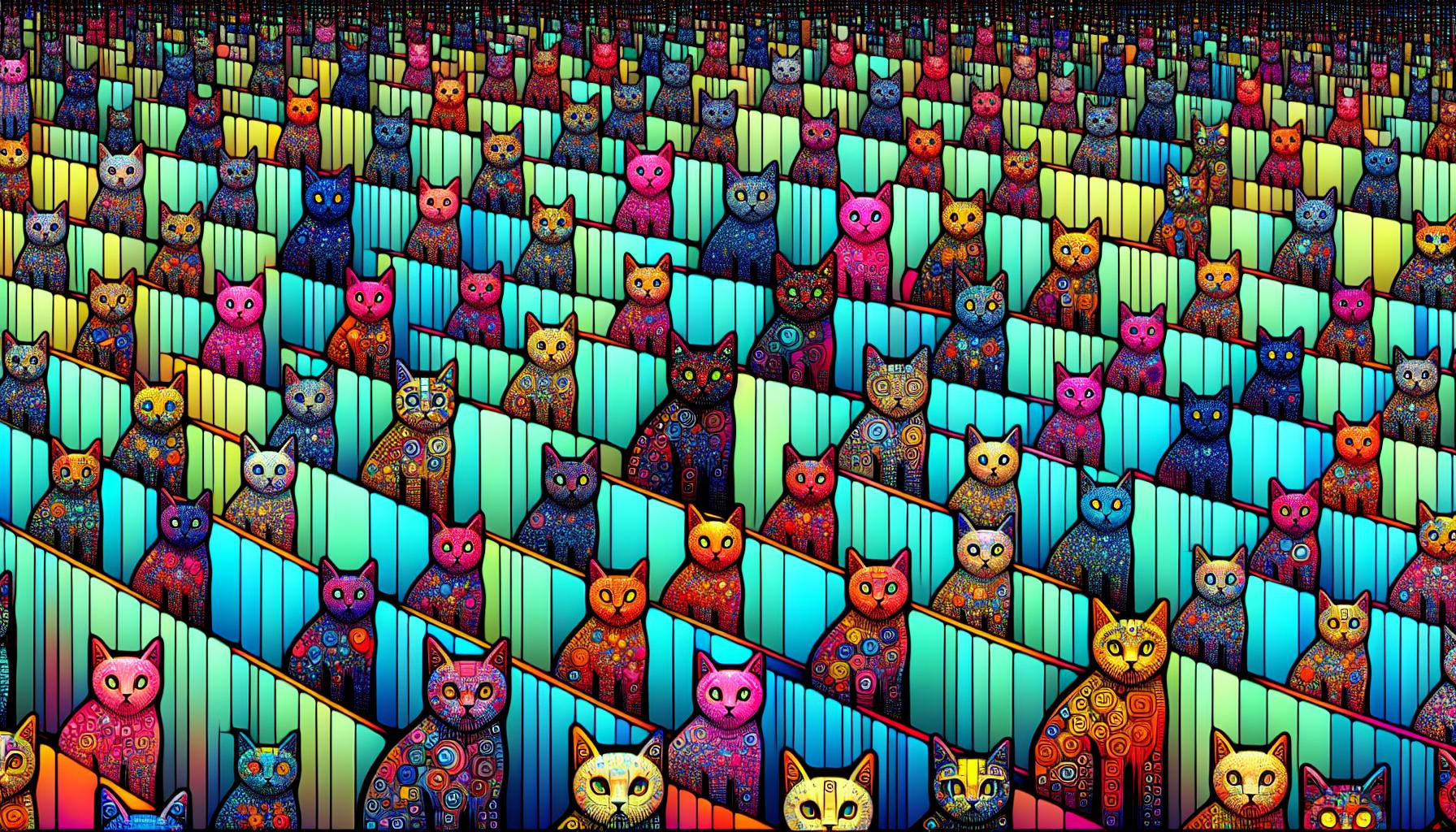

Rare Crypto Kitties sit at the scarce end of a collectible market where no two assets are identical. An explainer on Finst describes CryptoKitties as digital cats that exist as NFTs on the blockchain: unique, collectible cats rather than interchangeable coins. That uniqueness is what gives rarity its meaning here. A kitty is not rare because a listing says so; it is rare because of the traits it carries, the generation it belongs to, and the ownership record sitting behind it. This guide walks through what makes a kitty rare, what shapes its value, where to acquire one, and how to look after it once it is yours.
Unveiling the Rarity of Crypto Kitties
What Makes a Crypto Kitty Rare?
Rarity begins with genetics. Each kitty is created on the Ethereum blockchain using the ERC721 NFT standard and carries a set of features collectors call cattributes: fur pattern, eye shape, fur colour and more. Coin Center made the same observation in its analysis of the game, noting that each kitty is unique with its own set of attributes such as striped, droopy-eyed and slow. Some of those attributes are ordinary. Scarce combinations of them are what collectors actually hunt for.
Generation matters just as much. Kitties classified as Gen0 Founder Kitties belong to the earliest generation ever created, and their limited availability, combined with their foundational role in the ecosystem, keeps them among the most coveted holdings in the world of blockchain digital pets. When you evaluate a kitty, read both halves of the story: the cattributes on display, and the generation recorded against the token.
The Most Notable Rare Crypto Kitties
Within the rare tier, the standouts are the felines whose cattribute combinations are effectively one of a kind in the virtual cat marketplace. They function as aesthetic objects and as decentralized digital collectibles at the same time, which is why a single kitty can be discussed as artwork in one breath and as a portfolio line item in the next.
That population is not fixed, because collectors themselves extend it. BlockScience documented the underlying mechanic in its data-extraction study (Apr 25, 2018): cats are created by the players of the game, who can breed two cats to generate a new one, and each cat has its own genetic sequence. Breeding is therefore where strategy enters collecting. You are not only buying rarity, you are attempting to produce it, and the intricacies of kitty genomics traits are what make that attempt interesting rather than mechanical.
The Value of a Rare Crypto Kitty
Factors Influencing Price
Value rests on a stack of overlapping factors: the genetic makeup of the individual kitty, special classifications such as Gen0 Founder Kitties, and unusual combinations of kitty genomics traits. The scarcer a cattribute, the more desirable the feline carrying it tends to be, and that desirability is what turns a picture of a cat into a sought-after asset in a decentralized marketplace. Demand for a specific look can also shift as the community’s tastes shift, which is why two kitties with similar generation numbers do not necessarily command similar interest.
Record-Breaking Sales
Rare kitties have changed hands for substantial sums, and auction and breeding activity in the NFT gaming economy has produced transactions large enough to draw attention well beyond the game. If you research those numbers, pay attention to how they were calculated. The Medium analysis Ethereum CryptoKitties: by the Numbers by Alex Galea (Dec 5, 2017) quantifies the cost of each Kitty using the USD valuation of the transacted ether on the purchase date rather than in ether alone. That is a distinction worth checking before you treat any two headline prices as directly comparable.
Acquiring a Rare Crypto Kitty
Where to Find Rare Crypto Kitties
The primary venue is the Ethereum-based game CryptoKitties itself, launched by Dapper Labs as one of the first decentralized applications on the blockchain. There you can browse a large population of felines, each with its own genetic makeup and its own combination of traits.
Beyond the game, general NFT marketplaces such as OpenSea and Rarible also list blockchain collectibles, including rare kitties, which gives you a second set of listings to compare before committing to a purchase.
Tips on Purchasing
- Research the kitty genomics traits. Before you buy, study the cattributes of the kitty you are considering and how scarce each one is. Knowing which traits are common and which are unusual is the difference between paying for rarity and paying for a nice picture.
- Set a budget. Decide in advance what you are willing to spend and treat that figure as a limit rather than an opening position.
- Verify what you are buying. Look for verified sellers and research the history of the kitty. You can also go to the underlying data: a CryptoZombies walkthrough on building a CryptoKitties-style game describes a public method that returns all the data for a specific kitty from the blockchain, and a public copy of CryptoKittiesCore.sol on GitHub includes a check of whether a given address is the current owner of a particular Kitty.
- Account for Ethereum gas. Transactions on the Ethereum blockchain carry gas fees, so factor those costs into your plan instead of discovering them at checkout.
The Collector’s Journey
Building a Rare Crypto Kitty Collection
Building a collection is a slower project than making a single purchase. Most collectors start on the CryptoKitties platform and the wider virtual cat marketplaces, then narrow their focus: a particular cattribute, a particular aesthetic, or the Gen0 Founder Kitties that anchor the game’s history. A collection with a thesis tends to be more satisfying, and easier to explain, than one assembled at random.
Breeding and auctions add an interactive layer to that process. Participating puts you inside the NFT gaming economy rather than beside it, and community events and competitions are a practical way to expand a collection while meeting the people who know the trait tables best.
Community and Competitions
The community is where most of the useful knowledge lives. Talking to other collectors surfaces the details that listings omit, and competitions give you somewhere to show what you have assembled. Approach these spaces as a participant: share what you learn about genetics and pricing, and the answers you get back tend to improve accordingly.
Caring for Your Digital Feline
Storage and Security
Protecting a rare kitty means protecting the account that controls it. Keep your kitties in secure wallets or platforms that take blockchain security seriously, such as the DapperWallet crypto wallet, and harden access with two-factor authentication and strong, unique passwords. By exercising vigilance and following best practices in digital asset security, you reduce the risk of unauthorized access to your collection.
It is also worth understanding the limits of what lives on-chain. A discussion in the r/ethereum community points out that CryptoKitties relies on the closed-source website to generate pictures. Separately, the public copy of the core contract shows that ownership of a particular Kitty is checked against an address. Knowing which parts of your collectible sit where is part of owning it responsibly.
Breeding and Growth
Breeding is how a collection grows from the inside. Explore kitty genomics traits, pair your felines deliberately, and use auctions to trade what you produce. Each pairing is an experiment: the mechanic described by BlockScience means every new cat arrives with its own genetic sequence, so outcomes vary and patient breeders learn more from a series of attempts than from a single lucky result.
The Future of Rare Crypto Kitties
Technological Developments
Rare Crypto Kitties remain a reference point for NFT collectibles, and the Gen0 Founder Kitties minted under the ERC721 NFT standard on Ethereum still define what scarcity looks like in this corner of the market. Keeping up with developments around the standard, the wallets that hold these assets, and the platforms that support them is the most practical way to stay oriented.
Market Predictions
Nobody can tell you where prices go next, and anyone who claims otherwise is guessing. What you can do is control the inputs: understand kitty genomics traits well enough to judge scarcity yourself, budget for Ethereum gas before you bid, and verify ownership data on-chain rather than taking a listing at face value. Collectors who work that way are better positioned whatever the market does.
Conclusion
Rare Crypto Kitties combine genetics, generation, and provable ownership into a single collectible. The fundamentals are consistent: cattributes and Gen0 status drive desirability, breeding lets you participate in creating rarity rather than only buying it, secure wallets protect what you hold, and on-chain data lets you check claims for yourself. Treat those as your working checklist and the rest of the ecosystem becomes far easier to navigate.
Frequently Asked Questions
What are Rare Crypto Kitties?
They are digital collectibles on the Ethereum blockchain built on the ERC721 NFT standard, including the sought-after Gen0 Founder Kitties. Each one carries its own genetic traits, and the scarcity of those traits is what makes a kitty rare.
How can I acquire Rare Crypto Kitties?
Through the CryptoKitties platform by buying in auctions or breeding your own, and through NFT marketplaces such as OpenSea and Rarible. Store what you acquire in a wallet you control, such as the DapperWallet crypto wallet.
What should I check before buying?
Study the cattributes and how scarce each one is, set a spending limit, research the seller and the kitty’s history, and budget for Ethereum gas fees. You can also query a specific kitty’s data from the blockchain instead of relying on a listing description alone.
What role do CryptoKitties and Dapper Labs play in the NFT space?
CryptoKitties was launched by Dapper Labs as one of the first decentralized applications on the blockchain, and it gave collectors an early, working model of unique tokenised collectibles that much of the later NFT market followed.
How closely should I follow the market?
Closely enough to understand trait scarcity, transaction costs, and how sale prices are denominated. Those three things affect what you pay far more reliably than any forecast about where the market is heading.